
Planning for retirement involves more than just saving: it’s about making strategic decisions to protect and grow your nest egg. One key strategy is using rollovers, which allow you to move your retirement savings from one account to another without triggering taxes or penalties. This ensures that your hard-earned money continues to work for you while maintaining flexibility in managing your finances.
Whether you’re changing jobs, seeking better investment opportunities, or consolidating multiple accounts, understanding rollovers is essential. They help you keep your retirement funds safe, avoid unnecessary fees, and make your financial planning more efficient.
What Is a Rollover?
A rollover is the process of moving your retirement savings from one account to another while keeping your money protected from taxes and penalties. This allows you to manage your funds more effectively, take advantage of different account options, or consolidate multiple retirement accounts for easier oversight.
Properly handling a rollover is essential to maintain tax advantages. If done incorrectly, the transfer could be treated as a withdrawal, leading to taxes or penalties. By following the correct procedures, you ensure that your retirement funds continue to grow uninterrupted, keeping your long-term financial goals on track.
Here’s a clear, reader-friendly bullet-point version for the “Types of Rollovers” section:
Types of Rollovers
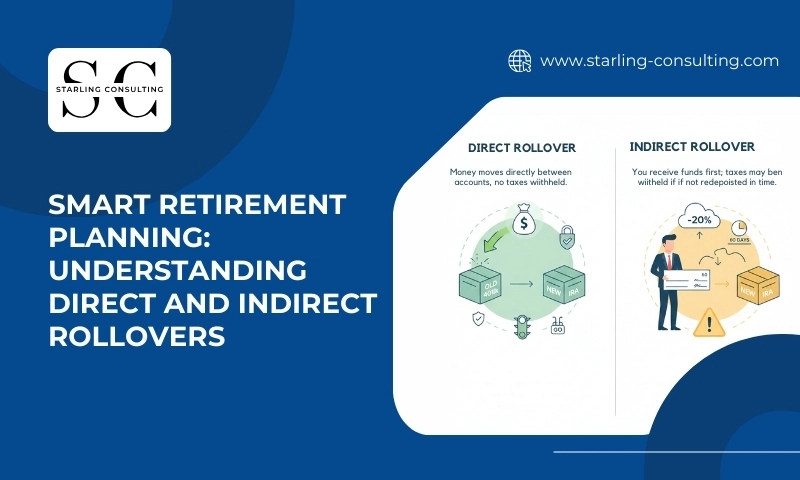
Direct Rollovers
- Funds move directly from one retirement account to another.
- No taxes or penalties are withheld.
- Considered the safest and most common method.
Indirect Rollovers
- Funds are first given to the account holder, who must deposit them into a new retirement account within a set timeframe.
- Taxes may be withheld if not completed correctly.
- Less common due to the higher risk of errors and penalties
What Is a Direct Rollover?
A direct rollover is a way to transfer retirement funds straight from one account to another without the account holder receiving the money. This method keeps your savings protected, tax-deferred, and avoids early withdrawal penalties.
Because the funds move directly between accounts, there are no withholding taxes, making it the safest and most common rollover option.
Example:
If you decide to move your retirement savings from your current account to a new account that better matches your financial goals, a direct rollover ensures the funds transfer safely and seamlessly, allowing your savings to continue growing uninterrupted.
What Is an Indirect Rollover?
An indirect rollover is when you receive the retirement funds first before moving them into a new account. Unlike a direct rollover, the money passes through your hands, so careful timing is essential to avoid taxes and penalties.
You must redeposit the full amount into another eligible account within 60 days. Taxes, usually around 20%, may be withheld upfront, and any missed deadlines or amounts not redeposited could be treated as taxable income, with potential early withdrawal penalties.
Example:
Suppose you receive a distribution check from your retirement account and plan to deposit it into a new account. If you complete the transfer within 60 days and make up any withheld taxes, this counts as an indirect rollover. However, missing the deadline or failing to replace withheld taxes could lead to unexpected taxes and penalties, making indirect rollovers riskier than direct ones.
Differences Between Direct vs. Indirect Rollovers
| Feature | Direct Rollover | Indirect Rollover |
| Process | Funds move straight from one account to another. | Funds are first given to the account holder, who then deposits them into a new account. |
| Risk of Taxes | No taxes withheld; tax-deferred status maintained. | Taxes (usually ~20%) may be withheld upfront; they must be replaced when completing the rollover. |
| Penalties | Avoids early withdrawal penalties. | Risk of penalties if funds are not redeposited within 60 days. |
| Convenience | Simple and automated; minimal steps for the account holder. | More complicated; requires strict adherence to deadlines and careful handling. |
| Speed | Fast and seamless transfer. | Slower, as the account holder must manage the transfer within 60 days. |
How Do Direct and Indirect Rollovers Work?
Direct Rollover – Step by Step:
- Contact your current retirement account provider to request a rollover.
- Specify the receiving account where funds should be transferred.
- The provider sends the funds directly to the new account.
- Confirm that the full amount has been received and credited.
Indirect Rollover – Step by Step:
- Request a distribution from your retirement account, and the funds are sent to you.
- Deposit the full amount into a new retirement account within 60 days.
- Replace any taxes withheld during the distribution to preserve the full balance.
- Confirm the deposit with the new account provider.
Practical Tips to Avoid Mistakes:
- Always verify deadlines for indirect rollovers to avoid penalties.
- Keep thorough records of all transfers and receipts.
- Consider a direct rollover whenever possible to minimize errors and tax risks.
- Consult your account provider or a financial advisor if you are unsure about any step.
Following these steps carefully ensures your retirement savings continue to grow uninterrupted and protects you from unnecessary taxes or penalties.
Benefits of Direct and Indirect Rollovers
Direct Rollovers
- No immediate taxes on transferred funds.
- Avoids early withdrawal penalties.
- Simple, hands-off process.
- Maintains tax-deferred growth of savings.
- Reduces risk of errors or missed deadlines.
- Helps consolidate multiple accounts.
- Access to a wider range of investment options.
- Supports long-term retirement planning goals.
Indirect Rollovers
- Allows temporary access to funds before transferring.
- Can redirect savings to a different account or provider.
- Provides flexibility for account management.
- Preserves retirement savings if redeposited within 60 days.
- May allow strategic tax planning when converting to different account types.
- Can consolidate accounts for easier tracking.
- Enables adjustment of investment strategies.
- Supports overall retirement planning if handled correctly.
What Is an IRA?
An IRA (Individual Retirement Account) is a special type of savings account designed to help individuals save for retirement while enjoying tax advantages. It allows your money to grow over time, either tax-deferred or tax-free, depending on the account type, making it a powerful tool for long-term financial planning.
There are different types of IRAs, such as Traditional IRAs, where contributions may be tax-deductible, and Roth IRAs, where withdrawals in retirement are generally tax-free. IRAs offer flexibility to invest in stocks, bonds, mutual funds, and other options, giving you control over how your retirement savings grow. They are especially useful for supplementing employer-sponsored retirement plans or consolidating multiple retirement accounts.
Types of IRA Rollovers
There are several ways to roll over retirement funds into an IRA, each with specific rules and tax implications.
401(k) → Traditional IRA:
Funds from a previous employer’s retirement plan can be transferred into a Traditional IRA. This rollover is generally tax-free if done correctly, and the money continues to grow tax-deferred until withdrawal. It’s a common choice for individuals who want to consolidate retirement accounts or maintain tax advantages.
401(k) → Roth IRA:
Rolling over funds from a 401(k) into a Roth IRA is possible, but it has tax implications. Since Roth contributions are made with after-tax dollars, any pre-tax amounts from the 401(k) are taxed during the rollover. However, future earnings and withdrawals from the Roth IRA can be tax-free, offering potential long-term benefits.
IRA → IRA:
Funds can be transferred from one IRA to another, either Traditional-to-Traditional or Roth-to-Roth. This type of rollover is usually simple and can help consolidate accounts, adjust investment options, or switch providers without triggering taxes if done correctly.
IRA Transfer vs. Rollover
| Feature | IRA Transfer | IRA Rollover |
| Process | Funds move directly between financial institutions (trustee-to-trustee). | Funds can move directly (direct rollover) or through the account holder (indirect rollover). |
| Account Holder Involvement | The account holder does not handle the money. | In a direct rollover, minimal involvement; in an indirect rollover, the account holder receives the funds first. |
| Tax Implications | No taxes or penalties if handled correctly. | Direct rollover: no taxes; indirect rollover: taxes may be withheld if not redeposited within 60 days. |
| Timing | No strict deadlines; flexible timing. | Indirect rollover must be completed within 60 days to avoid penalties. |
| Convenience | Simple and low-risk. | Direct rollover is convenient; indirect rollover carries a higher risk of errors and penalties. |
How to Transfer an IRA to Another Bank
Transferring an IRA from one financial institution to another is a straightforward process when done correctly. Here’s how to ensure a smooth transfer:
- Choose the New Institution: Select the bank or financial institution where you want your IRA to be transferred. Compare fees, investment options, and services.
- Open a New IRA Account: Ensure the new account is compatible with your existing IRA type (Traditional or Roth).
- Contact Your Current Provider: Inform your current institution that you want to transfer your IRA to a new provider. Ask for a trustee-to-trustee transfer to avoid any tax issues.
- Complete Transfer Forms: Both institutions will have forms to authorize the transfer. Provide accurate account details to prevent delays.
- Direct Transfer of Funds: In a trustee-to-trustee transfer, the funds move directly from your old account to the new one, keeping the tax-deferred status intact.
- Confirm Completion: Verify that the full amount has been received and credited to your new IRA account.
- Keep Records: Retain all statements and transfer confirmations for your records and tax purposes.
Disadvantages of Rolling Over a 401(k) to an IRA
Rolling over a 401(k) to an IRA can result in the loss of certain protections, such as stronger creditor protections offered by some 401(k) plans. IRAs may also have higher fees or expenses, which can reduce your long-term returns compared to your previous plan.
Additionally, IRAs generally limit loan and withdrawal options, and indirect rollovers carry the risk of mistakes; failing to redeposit funds within 60 days can trigger taxes and penalties. It’s important to carefully consider these factors before deciding to roll over your retirement savings.
Here’s a concise summary with an example for the section:
How Much Can I Borrow from My IRA for 60 Days?
The 60-day rollover rule allows you to temporarily withdraw funds from your IRA and redeposit them into another retirement account within 60 days without triggering taxes or penalties. There’s no set limit on the amount you can move, but you must redeposit the full distribution and replace any taxes withheld to maintain your retirement balance. Failing to meet the 60-day deadline can result in income taxes and early withdrawal penalties.
Example:
If you take $8,000 from your IRA to cover an urgent expense, you have 60 days to deposit the full $8,000 into another IRA. Completing the transfer on time ensures your funds remain tax-deferred. If you miss the deadline, the $8,000 may be considered taxable income, and early withdrawal penalties could apply.
Rollovers are a powerful tool for managing and growing your retirement savings, whether through direct or indirect methods. They offer flexibility, tax advantages, and the ability to consolidate accounts for easier management. However, it’s important to understand the rules, deadlines, and potential risks, especially with indirect rollovers,s to avoid taxes or penalties.
By planning carefully, choosing the right type of rollover, and following proper procedures, you can protect your retirement funds and make your savings work harder for your future. Whether consolidating accounts, exploring new investment options, or transferring funds between institutions, informed decisions about rollovers can help ensure a secure and well-planned retirement.
FAQs
Q1. Can I do more than one indirect rollover per year?
Ans: No, only one IRA‑to‑IRA indirect rollover per 12 months. Direct rollovers aren’t limited.
Q2. Does an indirect rollover count as a contribution?
Ans: No, rollovers don’t affect your annual contribution limits.
Q3. Do rollovers require tax forms?
Ans: Yes. Form 1099‑R for distributions; Form 5498 for the receiving account.
Q4. What if I miss the 60‑day deadline?
Ans: The amount becomes taxable, and under 59½, you may face a 10% penalty.
Q5. Are taxes withheld on indirect rollovers?
Ans: Yes. Usually 20% for 401(k) and 10% for IRAs, unless made up when redepositing.
Q6. Can I roll over a Roth 401(k) to a Roth IRA?
Ans: Yes, but pre-tax funds are taxed during the rollover.
Q7. Are there penalties under 59½?
Ans: Direct rollovers avoid penalties; indirect rollovers may incur taxes and a 10% penalty if rules aren’t followed.
Q8. What distributions are eligible?
Ans: Most are eligible, but RMDs and certain hardships cannot be rolled over.